Radiation Security
Is radon really bad for you?
Breathing radon over time increases your risk of lung cancer. Radon is the second leading cause of lung cancer in the United States. Nationally, the EPA estimates that about 21,000 people die each year from radon-related lung cancer. Only smoking causes more lung cancer deaths.
The United States EPA has developed the radon degree of 4.0 picocuries per litre to be the action level for radon gas in houses. Meaning, take action to lower radon levels that are above four picocuries per litre. Bear in mind that radon danger complies with a direct curve of the quantity vs the time subjected to it plus the added element that each individual might be essentially vulnerable to radon relevant cancer cells.
As a result of such research studies, Cohen and also others have wrapped up that those living in homes with radon levels approximately 4.0 pCi/ l have a lower than normal possibility of having lung cancer. While no degree of radon gas is completely safe, as with a lot of points in life we should balance the benefits and expenses to find our own" acceptable" levels.
Is radon mitigation really necessary?
When radon gas enters the body, it exposes the lungs to small amounts of radiation. In small quantities, experts say this is harmless. However, in persistent exposures or larger quantities, radon can damage the cells of the lining of the lungs, increasing a person's chance of developing lung cancer.
We walk outdoors and operate in the sunlight, exposing ourselves to ultraviolet radiation and also raising our threat of creating skin cancer cells. We drive in vehicles virtually daily even though more than 1 in 86 deaths is a result of car accidents. Individuals smoke, eat badly, as well as take part in unsafe actions daily. To some degree, radon gas is an additional day-to-day danger that all of us must take.
- Your threat of lung cancer enhances substantially with exposure to higher radon degrees.
- Lung cancer danger rises 16% per 2.7 pCi/L boost in radon direct exposure.
- Radon gas is a naturally-occurring result of the radioactive decay of Uranium in the soil.
- Depending on your geographical area, the radon degrees of the air you breathe outside of your residence might be as high as 0.75 pCi/L.
- The United States EPA has put it clearly, specifying, "Any radon exposure has some danger of causing lung cancer.
How do you eliminate radon?
Possible symptoms include shortness of breath (difficulty breathing), a new or worsening cough, pain or tightness in the chest, hoarseness, or trouble swallowing. If you smoke and you know you've been exposed to high levels of radon, it's very important to quit smoking.

For instance, an individual living in a house with a radon level of 4.0 pCi/L or reduced has an around 7 in 1000 chance of getting ill. On the various other hand, an individual living in a home with a radon degree of 20 pCi/L or greater has a 36 in 1000 possibility of having lung cancer cells. The World Wellness Organization (WHO) established an activity degree of 2.7 pCi/L based upon a three-year around the world research by greater than 30 popular scientists.
What to Understand about the Threats of Radon Gas in Your Home
What are the symptoms of radon in your home?
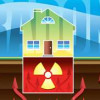
If a person has been exposed to radon, 75 percent of the radon progeny in lungs will become "harmless" lead particles after 44 years. http://RadoN1.Com/ When an alpha particle damages a cell to make it cancerous, the onset of lung cancer takes a minimum of 5 years but most often 15 to 25 years, and even longer.
Radon-222 has been categorized by International Firm for Study on Cancer as being cancer causing to people. There is sufficient evidence for the carcinogenicity of radon as well as its decay items in humans for such exposures. He was told that living in the residence was the matching of smoking 135 packs of cigarettes a day, and he as well as his family members had actually increased their threat of developing lung cancer by 13 or 14 percent.
How long does it take for radon to cause cancer?
Fact: You will reduce your risk of lung cancer when you reduce radon levels, even if you've lived with an elevated radon level for a long time. Keep in mind that radon levels below 4 pCi/L still pose some risk and that radon levels can be reduced to 2 pCi/L or below in most homes.